When Broken Pipes Hide Below Concrete
Under Slab Plumbing in Houston for sewage backups, broken pipes, and foundation-threatening leaks beneath your home's concrete slab
Sewage backing up into a home through floor drains or toilets is one of the clearest signs that something has failed in the plumbing that runs beneath your concrete foundation. Lifetime Plumbing addresses broken, deteriorated, and leaking pipes under the slab through detection, repair, replacement, and full rerouting of underground plumbing lines. In Houston, where expansive clay soils shift with the seasonal cycle of heavy rain and drought, under slab pipe failures are common and can accelerate foundation movement when left unaddressed.
The process begins with a camera inspection of your drain lines—a step that reveals conditions no surface-level assessment can identify. Cameras capture belly sags in the line, sections where pipes have dropped out of grade and hold standing water, cracks from soil movement or corrosion, and root intrusions. These images determine whether a pipe can be repaired in place, requires spot replacement, or needs to be fully rerouted above or around the slab. Skipping this diagnostic step before deciding on a repair approach leads to missed damage and repeat failures.
Request a camera inspection of your slab plumbing to see the actual condition of your drain lines before committing to any repair plan.
How Under Slab Repair Addresses Foundation and Sewage Risk
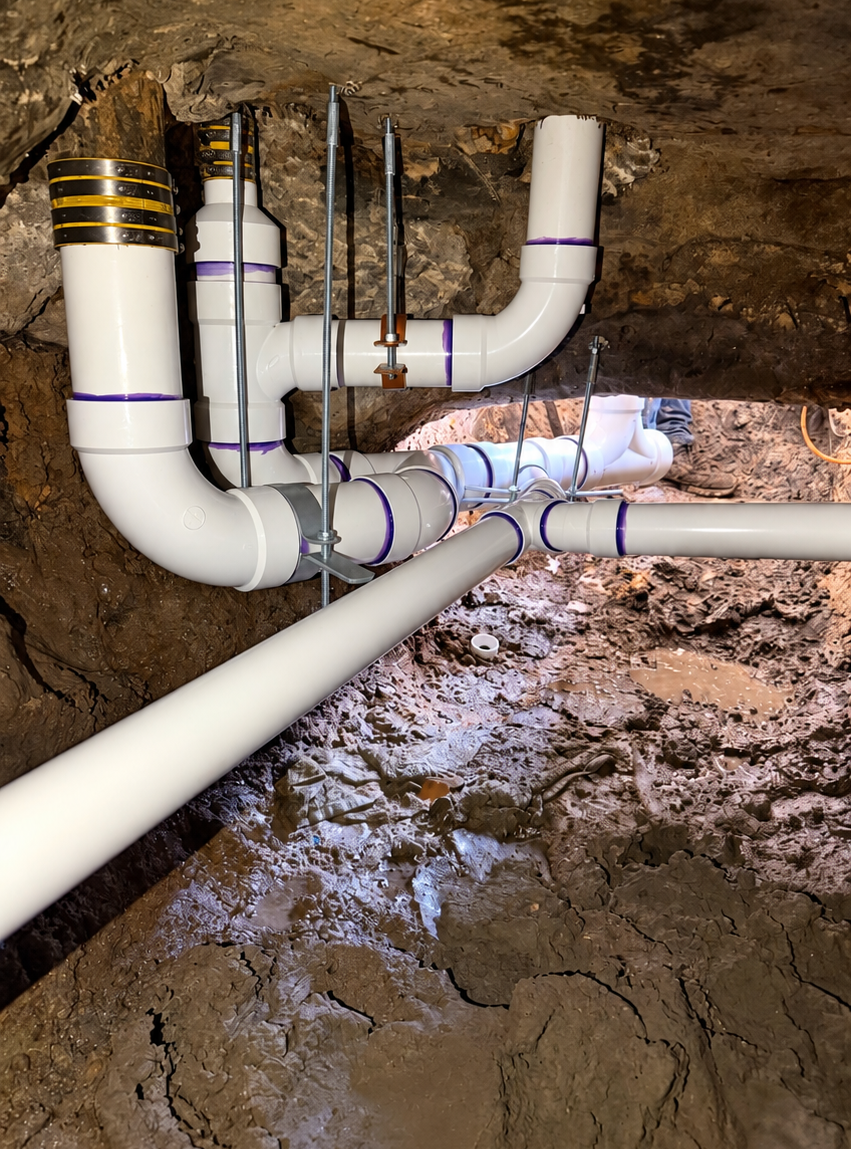
Repairing or replacing pipes beneath a concrete slab involves locating the damaged section precisely—using camera inspection combined with listening equipment or pressure testing—then accessing the pipe through controlled excavation or, in some cases, tunneling beneath the slab to preserve the floor surface above. The choice between open excavation and tunneling depends on the depth of the pipe, the location within the home, and the extent of the damage. Tunneling is often preferred in finished living spaces because it avoids demolishing tile, hardwood, or concrete floors.
After the repair or replacement is completed, the affected drain line is re-tested to confirm flow is restored and no additional failure points remain. Sewage odors inside the home stop. Drains that were slow or backing up return to normal function. In cases where a belly or sag was holding water and creating a persistent blockage, restoring proper pipe grade means water moves completely through the line instead of pooling at the low point.
For homebuyers in Houston, a pre-purchase slab plumbing inspection is a decision point that often gets overlooked. A camera inspection run through the sewer lines before closing reveals belly sags, pipe separation, root intrusion, or deteriorated cast iron that won't show up in a general home inspection—giving buyers accurate information about what they're taking on before the purchase is finalized.
Common Questions About Under Slab Plumbing
Under slab plumbing questions often come from homeowners who noticed a drain problem before they understood what was causing it. The following covers what most people ask before and during the repair process.
- What causes pipes under a slab to break or fail? In Houston, the primary cause is soil movement—clay soils expand when wet and contract during dry periods, which shifts the ground beneath the slab and stresses pipe joints over time. Cast iron pipes, common in older Houston homes, also corrode from the inside and develop cracks or collapse as they age.
- How do I know if my slab has a broken drain pipe? Sewage backing up through floor drains or tubs, persistent slow drains throughout the home, foul odors coming from floors or walls, or unexplained wet spots on the slab surface are all indicators that a camera inspection is warranted.
- What is a belly or sag in a drain line? A belly is a low point in a pipe where the surrounding soil has settled or shifted, causing the pipe to dip below its proper grade. Standing water collects at that point and creates chronic blockages even when there is no break in the pipe itself.
- Why is tunneling sometimes used instead of breaking up the floor? Tunneling accesses the pipe from below without disturbing finished flooring above—a practical approach when the damage runs beneath tile, hardwood, or other materials that would be costly to remove and replace.
- When should under slab plumbing be inspected before a home purchase? Lifetime Plumbing can run a camera inspection through the drain lines at any point during the due diligence period, and findings can be used to negotiate repairs or credits before the transaction closes.
Lifetime Plumbing runs camera inspections that document every section of your under slab drain lines and provides clear findings on what needs immediate attention versus what can be monitored—so you have the information needed to make a well-informed decision about your home's plumbing.