
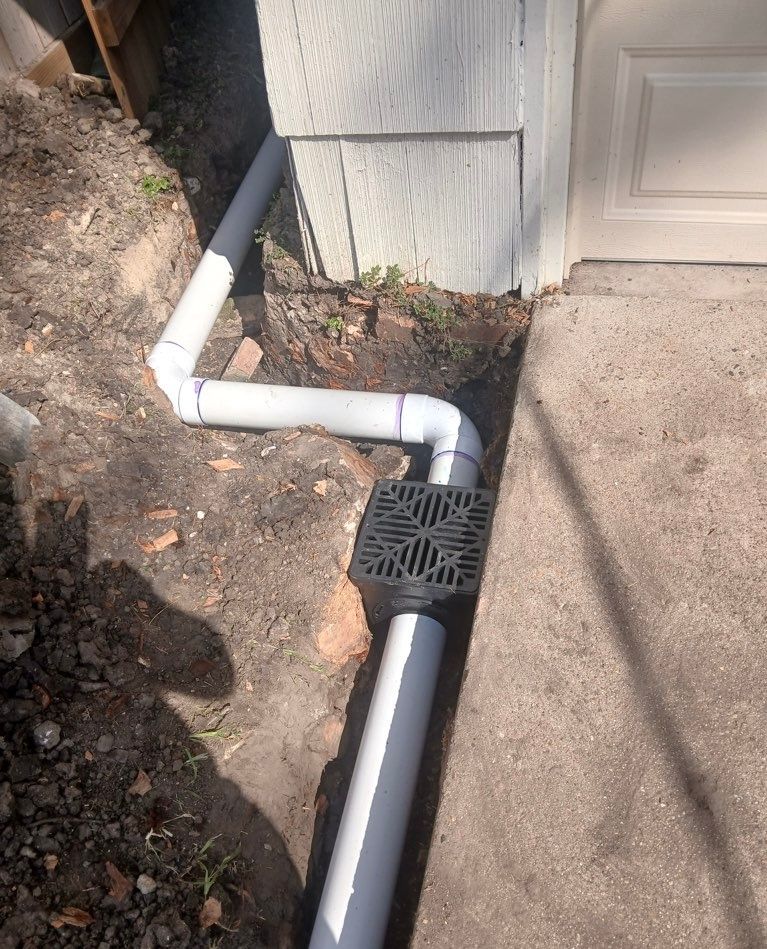
Standing Water Redirected Away From Your Property
French Drain Installation in Houston for yards with chronic water pooling, soggy low-lying areas, and surface runoff that collects near foundations
Houston's flat topography and heavy rainfall events create conditions where surface water has nowhere to move quickly—and low areas in a yard collect that water until it either absorbs slowly or sits long enough to damage landscaping, erode soil, or push moisture against a foundation. Lifetime Plumbing installs French drain systems that intercept that surface and subsurface water and redirect it to a controlled discharge point away from the home and property. The work involves grading, trenching, pipe installation, and aggregate placement to create a drainage path that functions during and after heavy rain events.
A French drain works by collecting water through a perforated pipe bedded in gravel, which allows water to enter the system from the surrounding soil and surface, then carries it along a graded path to a discharge location—typically a street curb, drainage easement, or detention area. In Houston, where clay soils absorb water slowly and rainfall can reach several inches in a short period, the placement and grade of the drain must account for both surface sheet flow and subsurface water moving laterally through the soil. The discharge point and outlet design matter as much as the pipe itself—a French drain that terminates without a clear outlet path backs up and stops functioning.
Schedule a property drainage evaluation to identify where water is entering, pooling, and what path it needs to reach a proper outlet..
Why Standing Water Happens and How to Stop It
French drain installation begins with identifying the source and movement pattern of the water—whether it is primarily surface runoff flowing toward a low point, subsurface water rising through clay soil, or water moving laterally from a neighbor's property or a slope. That diagnosis determines where the collection trench should run, how deep it needs to go, and where it will outlet. Lifetime Plumbing can also incorporate sprinkler system installation into drainage projects, which matters when the drainage work involves regrading areas that contain existing irrigation heads or when clients want both systems installed together.
After a French drain is installed, the most immediate and visible change is that low areas in the yard that previously held standing water for days after rain drain within hours. Soggy turf that was difficult to walk on without sinking firms up as subsurface moisture moves into the drain system. Along foundations, the persistent damp soil line that indicates water sitting against concrete is replaced by drier conditions that reduce hydrostatic pressure on foundation walls and below-slab soil.
French drain repair is also available for systems that were installed previously but are no longer functioning—common causes include sediment and root infiltration through the perforations, a collapsed section of pipe, or an outlet that has become blocked or buried. A clogged French drain often looks identical to no drain at all, with water pooling in the same locations as before the original installation. Inspecting the outlet and running water through the system from the inlet end helps identify where the blockage or failure point is located..
What Property Owners Usually Ask About French Drains
Drainage questions in Houston frequently come after a significant rain event when homeowners notice water pooling in places they hadn't previously been concerned about. The following addresses the most common questions about French drain installation and function.
- What is the difference between a French drain and a simple surface drain? A surface drain collects water at a single point, while a French drain collects water along its entire length through perforations in the pipe—making it more effective for moving water out of broad soggy areas rather than just a single low point.
- How deep does a French drain need to be installed? Depth depends on the source of the water—surface drainage systems run shallower, while systems targeting subsurface water moving through the soil profile may need to reach below the clay layer, which in Houston can vary significantly by location.
- Why do French drains stop working over time? Sediment, clay fines, and root intrusion enter the perforated pipe through the aggregate layer and gradually reduce the pipe's ability to accept water—a clogged French drain can sometimes be hydro-jetted to restore function rather than requiring full replacement.
- Can a French drain be installed along a fence line or property boundary? French drains are commonly installed along property perimeters in Houston where water flows in from adjacent grades, and placement along a fence line is a practical solution when that is the path water is taking before entering the yard.
- When is the right time to schedule French drain installation? Installation can proceed during dry periods when excavation is easier and the work area is accessible—waiting until after a major rain event to call typically extends the timeline, as scheduling demand increases significantly following flooding events in Houston.
Lifetime Plumbing installs French drain systems sized and routed for the specific water movement patterns on your property—connect with us to arrange a site visit and get a clear picture of what drainage solution fits your yard's layout and conditions.